

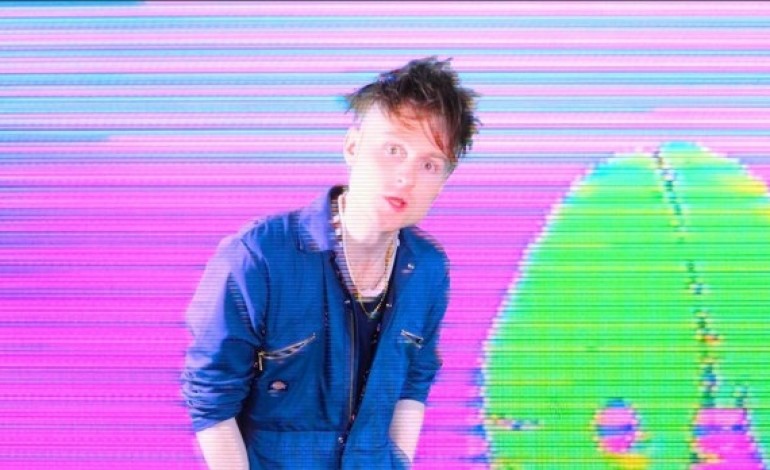
Following last week’s news that the maiden voyage of the Eurovision Song Contest’s live tour was postponed due to “unforeseen challenges”, British fans of the contest have just been treated to some exciting developments. The BBC, who process candidates and selects the eventual winner, have revealed the UK’s 2026 representative as Look Mum No Computer, a singer-songwriter with a large online following and a flair for geeky electronic music.
This year marks the 70th annual Eurovision Song Contest (ESC), held in Austria following singer JJ’s victory with song ‘Wasted Love’ in 2025. As a member of the “Big Four” of Eurovision, the UK’s entry receives an instant bye to the grand final. Last year’s British entrants Remember Monday were fairly well received by the internal Eurovision jury, circumventing our national tradition by receiving points and finishing 19th out of 26.
View this post on Instagram
The ESC is organised by a cohort of broadcasting companies around Europe, known as the European Broadcasting Union (EBU), and with the BBC as our primary public broadcaster it has always been a key part of the EBU. In the past, they ran live televised auditions and a public vote to choose our candidate for the song contest, but between 2011 and 2015, and currently since 2019 they instead elect them via an internal jury of music industry professionals.
This afternoon the BBC revealed their choice – Sam Battle, who goes under the alias Look Mum No Computer. He is as they describe him in the article “an inventor of unique musical machines”, an innovator who engineers novel instruments and synthesisers from retro toys and tech as a pastime. Among his many contraptions, highlights include a church organ made from Furbies, a bizarre children’s toy from the turn of the millennium, and the Sega MegaDrive synthesiser, created using a Sega MegaDrive games console. He owns a museum in Ramsdale in Kent called “This Museum Is (Not) Obsolete”, which houses and displays his many curios.
Formerly the frontman of an indie rock band called Zibra, performing a BBC Introducing set at Glastonbury Festival in 2015 with them, Battle opened his Youtube channel in 2013 to promote the group. After the band dissolved he then used it to post videos documenting his inventions before uploading his debut solo effort ‘Groundhog Day’ in 2019. Between all of his projects combined, he’s amassed 1.4 million followers on his online platforms, with his Youtube account alone having over 704,000 followers and nearly 85 million views.
His studio releases are a lively mix of electro-pop played on a full arsenal of analogue synthesisers, with his indie-style vocals laid over it. In recent years the UK Eurovision selections have made a reputation for playing it safe, opting for more generic pop with limited success other than Sam Ryder’s second place finish in 2022, but Look Mum No Computer seems to be a turning point to something more radical. After having heard the 2026 entry single, BBC Radio 2 DJ and Eurovision enthusiast Scott Mills said “The UK often gets criticised at Eurovision, or it has in some years. ‘We’re always really safe, we always keep it really middle of the road.’ So we are going to try something different this year. Why not? Let’s try something different, and it is different.” The BBC also quoted other opinions, including Oscar-nominated composer Daniel Pemberton, who said on social media site X he was “very excited we are going to have a truly unique eccentric oddball repping the UK (meant in the best way possible) at Eurovision”.
The grand final of this year’s Eurovision Song Contest will be held at the Wiener Stadthalle in Vienna on the 16th of May. Look Mum No Computer’s entry is due to be make its debut to the public on Scott Mills’ Radio 2 breakfast show at some point in the next few weeks. You can follow Sam’s journey on the BBC and on his Youtube channel, or find his music on streaming platforms.

