

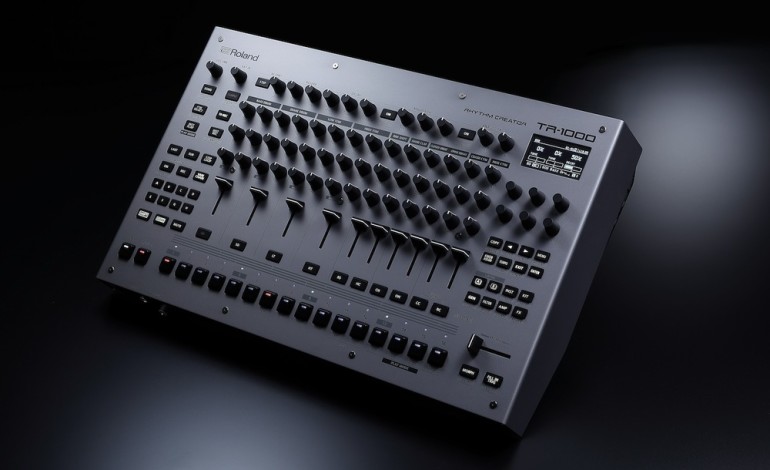
Roland’s TR series, particularly the TR‑808 and TR‑909, have long occupied legendary status in the history of electronic music. Their distinct sounds helped shape genres from hip-hop to techno. But over recent decades, Roland’s newer drum machines focused heavily on digital modelling and sample‑based architecture rather than real analogue circuits.
With the TR‑1000, Roland have recreated 16 analogue circuits based on the original architecture of the TR‑808 and TR‑909 drum machines, engineered with modern components and design insights. Alongside that, the TR‑1000 houses digital sound engines and a sampling platform. In doing so, Roland bridge the gap between the nostalgia of some of their best products and the boundary pushing technology of some of their newest.
The TR‑1000 was unveiled on October 1, 2025. Its launch pricing is set at £2,286, a tier that places it in serious professional territory, though still arguably more accessible than mint condition TR‑808 or TR‑909 vintage units, which are costing upwards of £5,000 nowadays.
Early reactions from gear media and user communities have been emphatically positive, focusing on the boldness of Roland returning to real analogue synthesis, and praising the depth of its hybrid workflows. Still, some skepticism and caution exist – with such complexity and price, its success depends on how many producers are willing to invest in a high-end instrument rather than relying on software or more affordable alternatives.
In user forums, early adopters report promising results. Some note the learning curve of mastering “shift functions” and deeper features, but overall enthusiasm is strong. Others mention small bugs or freezes during initial usage, which is common for day‑one hardware launches
Inaugural jam on the Roland TR-1000
byu/dimundsareforever insynthesizers
The TR-100 feels as though Roland are making a statement: that they aren’t ignoring the recent wave of nostalgia towards their famous hardware products. But also this isn’t a nostalgic product – it has the DNA of the TR-808 and TR-909, but really it is it’s own machine, the boundaries of which have not yet been found.

