

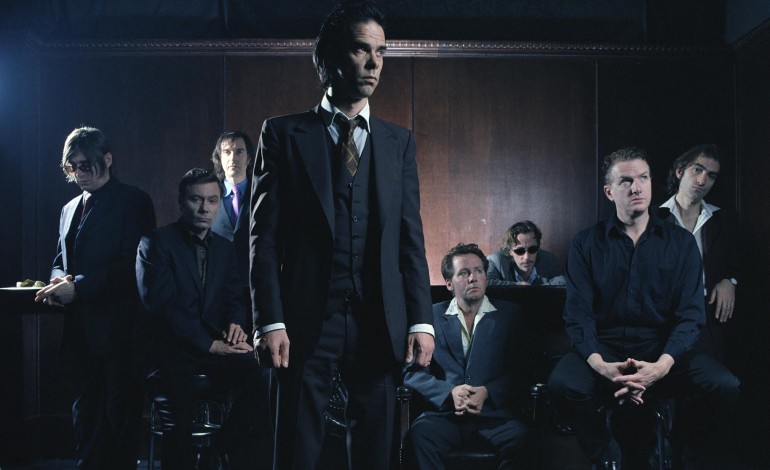
British singer Nick Cave has opened up on what he has learned from loss and grief, 10 years after losing his son Arthur. The young boy tragically died at the age of 15, in 2015 after suffering from a fatal brain injury after plunging onto the underpass of Ovingdean Gap in Brighton. He was one of the twin sons Cave shares with wife and fashion designer, Susie Bick.
Back in 2022, Cave also another son, his eldest, Jethro Lazenby, who passed away after being diagnosed with schizophrenia at the age of 31.
The singer famously owns a website called Red Hand Files, on which he sincerely and unapologetically answers questions from his fans. One of the most recent questions asked to Cave was about how he copes with his grief and he and his wife have learned from their loss.
The Australian singer responded to the fans in a heart-warming posts, sharing: “Dear Carlos and Emma,
The pain remains, but I have found that it evolves over time. Grief blossoms with age, becoming less a personal affront, less a cosmic betrayal, and more a poetic quality of being as we learn to surrender to it. As we are confronted with the intolerable injustice of death, what seems unbearable ultimately turns out not to be unbearable at all. Sorrow grows richer, deeper, and more textured. It feels more interesting, creative, and lovely.”
“To my great surprise, I discovered that I was part of a common human story. I began to recognise the immense value and potential of our humanness while simultaneously acknowledging, at my core, our terrifyingly perilous situation. I learned we all actually die. I realised that although each of us is special and unique, our pain and brokenness is not. Over time, Susie and I came to understand that the world is not indifferent or cruel, but precious and loving – indeed, lovely – tilting ever toward good.”
“I discovered that the initial trauma of Arthur’s death was the coded cypher through which God spoke, and that God had less to do with faith or belief, and more to do with a way of seeing. I came to understand that God was a form of perception, a means of being alert to the poetic resonance of being. I found God to be woven into all things, even the greatest evils and our deepest despair. Sometimes I feel the world pulsating with a rich, lyrical energy, at other times it feels flat, void, and malevolent. I came to realise that God was present and active in both experiences.”
“These days, I am neither distrustful nor suspicious of the world, even though my heart breaks for it, and I am not despairing, depressed or embittered. Indeed, I see heartbreak as the most proportional response to the state of the world – to say I love you is to say my heart breaks for you, and this sentiment resonates within all things, bringing a clarity to both the world before us and the world beyond the veil. Sorrow becomes a way of life, part laughter, part tears, with very little space between. It is a way of conducting oneself in the world, of loving it, of worshipping it.”
“I read this letter to Susie, and she agreed that things get better in time. She reminded me that her dreams of Arthur from ten years ago were terrible, scorched-earth affairs, full of shame and weeping. She said Arthur still visits her every week. He is always the same age, around ten years old. Nothing much happens, he simply sits with her. Sometimes she laces his shoes. Sometimes she combs his hair. Sometimes he crawls into her lap and wraps his arms around her neck. She told me that she recently had a dream in which Arthur had a button for a nose, and when she pressed it a little blue light blinked on. There is no despair or remorse in these dreams. They are, instead, an uncomplicated joy.”
“I’m not sure what else I’ve learned, Carlos, except that here we still are, a decade later, living within the radiant heart of the trauma, the place where all thoughts and dreams converge and where all hope and sorrow reside, the bright and teary eye of the storm – this whirling boy who is God, like every other thing.
We remember him today.
Love, Nick”
Cave spoke to NME in 2023 about his regrets, where he talked about releasing music in what felt like it was too soon after his son’s death and how he somehow had become repelled by work. “That idea that art trounces everything, it just doesn’t apply to me anymore. Rather than making me bitter, it did the opposite in some way. It made me much more connected to people in general. I don’t know about the music, but these days I feel a more urgent need to connect with people. That there’s a kind of duty in that, that maybe I didn’t feel before. That I have at my disposal something that’s very valuable: to make music, and I don’t want to squander that opportunity in phoning in gigs or doing half-hearted attempts. Every one is as important as each other.”
Check out that full interview here.

