

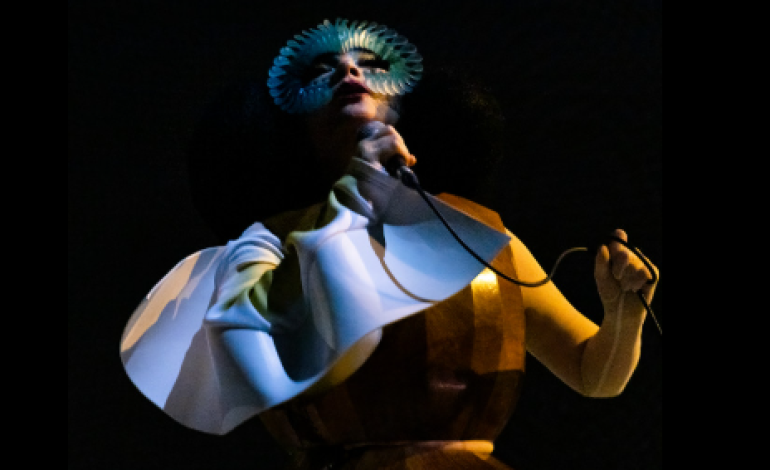
Björk has publicly expressed solidarity with Greenlanders as renewed threats from US President Donald Trump to take over the territory intensify diplomatic tensions between Washington, Copenhagen and Nuuk. In a new social media post, the Icelandic artist aligns herself with calls for Greenlandic independence from Denmark while warning against the prospect of the island moving “from one cruel coloniser to another”.
Trump has again raised the idea of the US taking control of Greenland, arguing that the Arctic island is important for security and strategic reasons. The latest remarks echo his 2019 push to explore buying Greenland from Denmark, which at the time was dismissed by Copenhagen as “absurd” and led to a diplomatic spat after Trump cancelled a state visit.
In recent days, the rhetoric has sharpened. Katie Miller, wife of senior Trump adviser Stephen Miller, posted an image of Greenland covered by a US flag and captioned “SOON” on social media, prompting outrage in Denmark and Greenland. Trump has meanwhile tapped Louisiana governor Jeff Landry as a special envoy tasked with advancing US interests over the territory, a move critics describe as a political escalation.
Into this escalating geopolitical dispute, Björk has added a cultural and moral intervention, using her platform to spotlight Greenland’s long colonial history and present-day inequalities. In her Instagram note, she sends “blessings” to Greenlanders “in their fight for independence” and explicitly connects their struggle to Iceland’s own decision to break from Danish rule in 1944, saying Icelanders are “extremely relieved” they preserved their language and sovereignty.
Björk also references historic and recent Danish policies towards Greenlanders, including reports of a state-backed IUD programme affecting Greenlandic women and girls in the late 1960s and early 1970s, and contemporary child welfare cases that campaigners say disproportionately target Greenlandic families. She characterises the current moment as a choice between continued subordination within the Danish kingdom and the risk of a shift to US control, which she frames as continuations of colonial dynamics.
Björk’s intervention lands in a music culture that is increasingly attuned to Indigenous rights, climate justice and the politics of land and extraction. Greenland’s own musicians have long folded themes of language, environment and autonomy into everything from indie releases to throat‑singing, and the renewed independence debate is likely to intensify that creative focus.
Denmark and Greenland have responded in unusually direct terms. Danish prime minister Mette Frederiksen has urged Trump to “stop the threats” and underlined that Greenland is “not for sale” and cannot be annexed under international law.
UK Prime Minister Keir Starmer has voiced measured concern over the escalating rhetoric surrounding Greenland, emphasising the importance of respecting Denmark’s sovereignty as a key NATO ally. Speaking with the BBC, Starmer said, “Greenland and the Kingdom of Denmark must decide the future of Greenland, and only Greenland and the Kingdom of Denmark”.
In an interview aboard the Air Force One, Trump said “the EU needs us to have [Greenland], and they know that”. In response, Paul Pinho, European Commission chief spokesperson, stated it is “certainly not” their position.

