

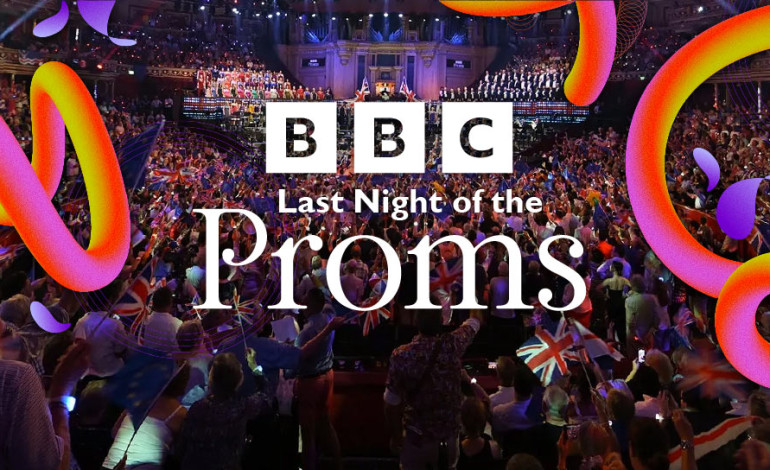
When dusk fell over South Kensington on September 13 2025, the Royal Albert Hall glowed like a beacon of tradition. But just steps away, the streets of London were pulsing with demonstrations, and the kind of tension that pulses beneath the veneer of patriotic pageantry. Inside the grand atrium, the Last Night of the Proms offered a different light, one characterised by a sense of inclusivity, exuberance, and musical defiance.
The Last Night of the Proms was a spectacle characterised by a sense of duality. Hong Kong born conductor Elim Chan took the podium, making her Proms debut, commanded the night’s arc with crispness and energy. In her hands, Mussorgsky’s ‘A Night on the Bare Mountain’ roared with an uncanny vivacity; Dukas’s ‘The Sorcerer’s Apprentice’ still conjured myth and menace; Shostakovich’s ‘Festive Overture’ erupted in a ‘Soviet Technicolor brilliance.’ It was orchestrally bold, emotionally jagged, and rather beautiful, which felt fitting for a night already stepped in global symbols: EU bunting, flags of many nations, and voices that refused to sit quietly.
Taking the stage was British soprano Louise Alder, who in her cleverly restrained Union Jack dress delivered a performance that balanced vocal poise, emotional honesty, entertwined with a subtle statement around identity, motherhood, and what it means to belong. Alder’s rendition of ‘Rule, Britannia!’, was not just a simple performance characterised by tradition, but one that was acutely aware of what tradition carries, its exclusionary elements, and how voices like that of Alder’s can help re-shape existing narratives. In the words of Alder, who said: “It’s genuinely an honour for me to sing at the Last Night and be part of that and the history.”
When ‘Bohemian Rhapsody’ first exploded onto the airwaves in 1975, with its audacious structure of ballad, operatic interlude, rock-epic, it felt like a declaration, an anthem that took the world by storm. Fifty years later under the vaulted ceilings, at the Last Night of the Proms, the song returned not as a nostalgic relic, but as a piece reimagined featuring Brian May and Roger Taylor. The version reimagined by Stuart Morley, alongside the BBC Symphony Orchestra, and the National Youth Choir, aimed to infuse new gravitas into the classic, as the flamboyance of the 1970’s was met with a classical poise. The Proms framed Queen’s masterpiece as both heritage and experiment, showing that tradition need not calcify but can evolve, absorb and surprise.
The finale was a microcosm of the 2025 Proms season, reflecting its overarching themes and changing sensibilities. The spectacle of flags, anthems and ceremony offered comfort in the familiar, while new arrangements and unexpected voices suggested a country wrestling with change. Outside, the protests were a reminder that belonging here is still contested, that heritage can exclude as easily as it inspires. Yet in blending rock with symphony, global sounds with national symbols, the Proms hinted at a way forward by not erasing the past, but through recasting it, letting tradition breathe enough to carry more than one voice.

