

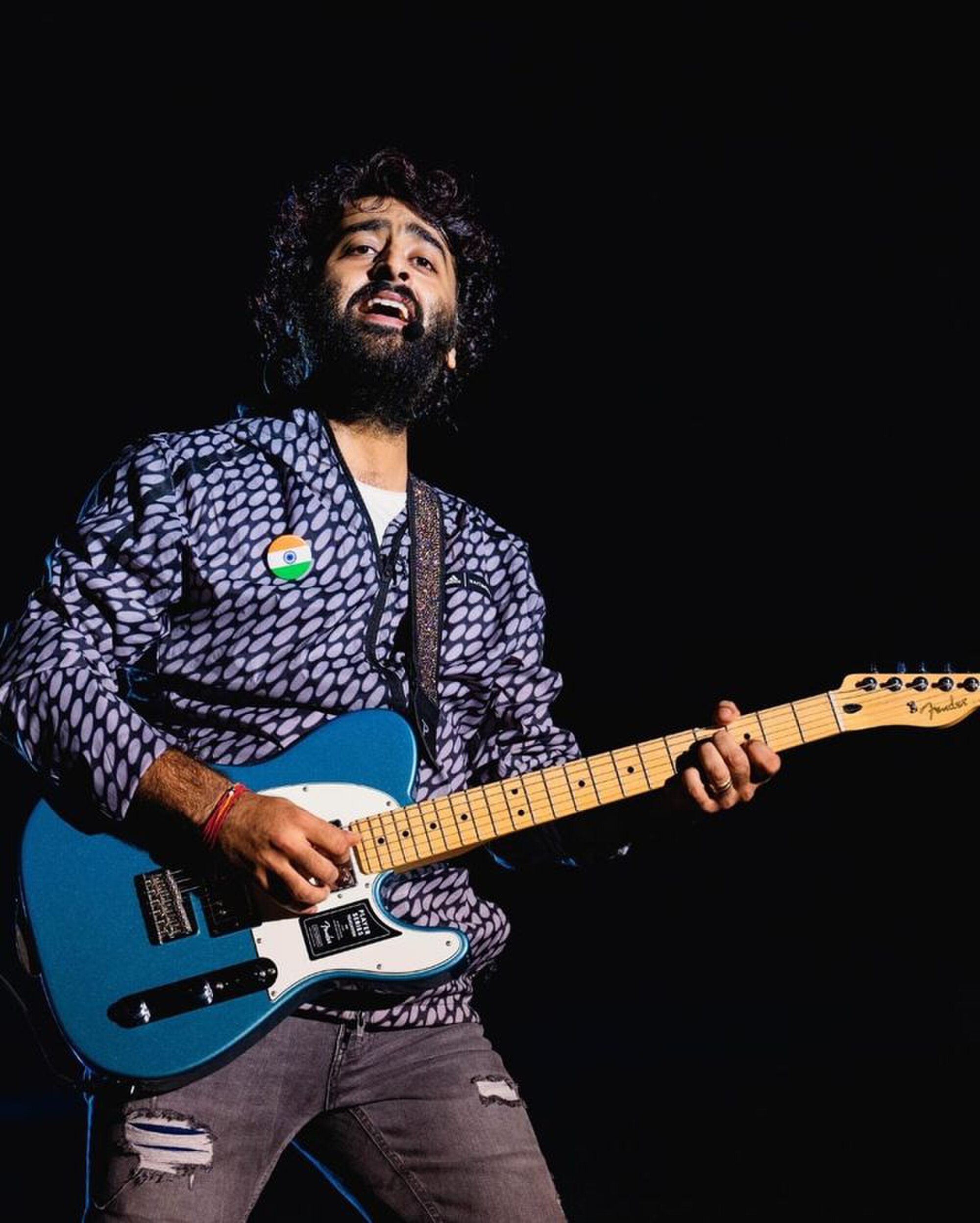
History was made last night when Bengali singer Arijit Singh performed before more than 40,000 fans at Tottenham Hotspur Stadium in London. The venue, which has hosted global stars such as Beyoncé, Kendrick Lamar and Imagine Dragons, became the stage for Singh’s landmark appearance as the first South Asian artist to headline a major UK stadium.
“He’s doing this to show the sheer power of him as an artist, but it’s also an incredible statement of Indian culture in the west,” South Asian BBC presenter Nihal Arthanayake said.
Though not a household name in the west, Singh is one of the most listened-to artists on Spotify, boasting nearly 50m monthly streams. His relative anonymity outside of South Asia is often attributed to his lyrics being performed in Hindi and Bengali, as well as his reserved personality that keeps him away from the media spotlight.
Singh was born in Jiaganj, West Bengal, into a family of musicians and began playing music at the age of three. His breakthrough came in 2013 with “Tum Hi Ho,” the lead track for the Bollywood romance Aashiqui 2. The ballad dominated charts across India, cementing Singh’s status as one of the country’s most important voices.
As a playback singer, Singh belongs to a central tradition in Bollywood, lending his voice to songs that actors later perform on screen. This unique role has given him an unmatched reach, with his voice tied to many of India’s most memorable films of the past decade.
During the performance, Singh included “Sapphire”, a multilingual track co-written with Ed Sheeran. Though Sheeran was not present at the concert, the song marked a notable moment in Singh’s set, highlighting his expanding global reach and cross-cultural collaborations.
Their partnership has drawn international attention, with Sheeran previously sharing that he was first captivated by Singh’s voice after hearing his 2013 hit “Tum Hi Ho.” He later described Singh as “one of the most soulful artists I’ve ever heard.”
The concert lasted more than three hours, with Singh moving fluidly between styles and instruments. He performed a retro rendition of “Saariyya” that caught long-time fans off guard, alongside modern, myth-driven pieces that highlighted his experimental side. His setlist balanced Indian classical instrumentation with contemporary arrangements, showcasing his versatility as both a vocalist and a musician.
The stadium was nearly at full capacity, with the majority of the audience made up of fans from London’s South Asian community. For many, the night was not only a concert but also a rare moment of cultural representation on one of the UK’s largest stages
With his Tottenham show, Singh proved that his artistry transcends language and geography. As Arthanayake put it, the night was as much a celebration of Indian culture in the west as it was a triumph for Singh himself—a once-in-a-generation voice finally recognised on the scale it deserves.
